Modern healthcare systems are stretched to the limit trying to get increased outputs with reduced resources, as the escalating costs, staffing issues, and administrative overburden keep pushing the existing resources to the maximum.
A lot of this inefficiency is due to complicated procedures, especially in such fields such as medical billing, where precision and speed are directly related to the performance at the financial level.
This is the area where AI and automation are already leaving a tangible impact.
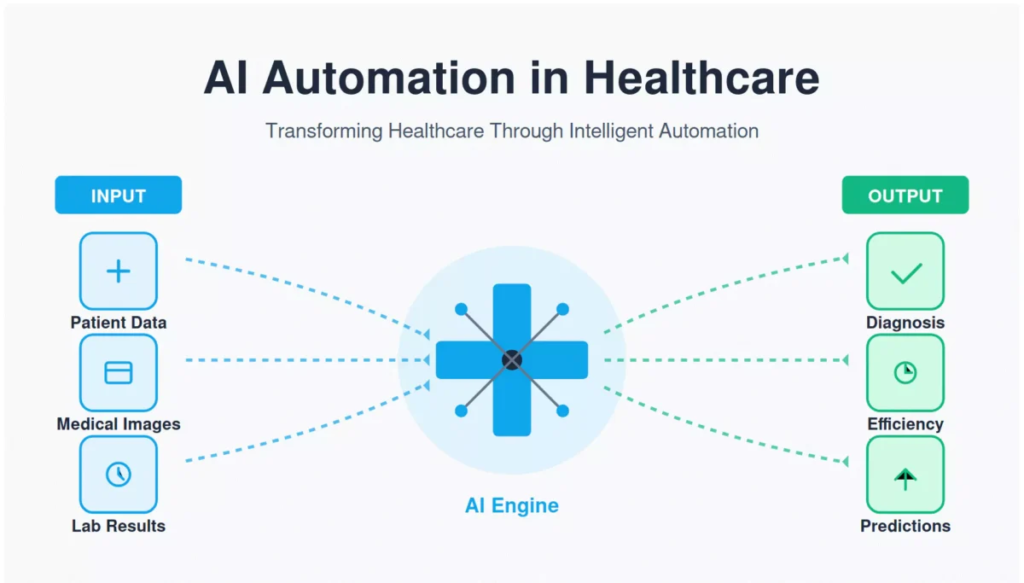
These technologies are transforming the way healthcare works by making the processes more streamlined, minimizing human intervention, and enhancing decision-making.
They have an impact particularly in highly complex areas, where a minor inefficiency can result in significant operational and revenue issues.
How AI is Reshaping Complex Healthcare Workflows
Artificial Intelligence is not simply enhancing healthcare processes- it is literally eliminating the tension created by multi-layered processes.
AI helps to accelerate daily tasks, increase their accuracy, and enhance departmental coordination.
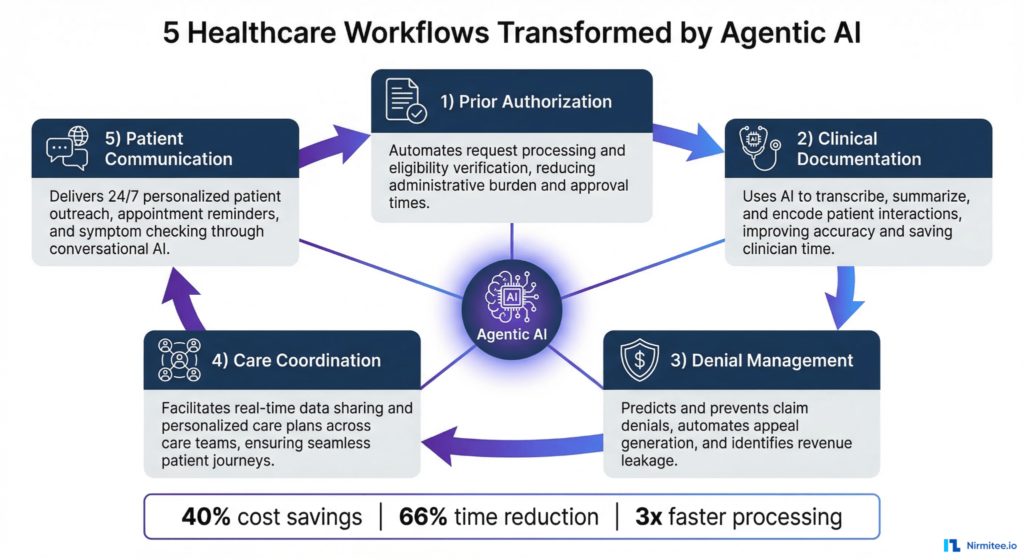
Turning Clinical Interactions into Structured Data
Clinical documentation is one of the most direct effects of AI.
Rather than making doctors take notes manually, AI tools can record and transform the conversations between doctors and patients into data that can be used.
- Reduces time spent on documentation
- Minimizes human errors in records
- Ensures accurate data flows into billing and coding systems
This is particularly essential in specialties such as OBGYN, where documentation has a direct impact on the accuracy of reimbursement during the process of carrying out the OBGYN medical billing.
Predicting Operational and Financial Risks
AI can help healthcare providers transition from reactive to proactive operations, as it recognizes the risks before they arise.
- Detects patterns that lead to claim denials
- Forecasts patient volume and resource needs
- Flags potential workflow inefficiencies early
When these insights are acted upon, healthcare specialists will be able to avoid losing revenue and time delays.
Enhancing Decision-Making in Complex Processes
Healthcare processes are usually high-stakes decisions that must be precise. AI assists in making these decisions by processing big data in real-time and delivering actionable information.
- Improves accuracy in coding and billing decisions
- Reduces dependency on manual judgment
- Supports consistency across high-volume tasks
This degree of accuracy is essential in such complex operational areas as OBGYN medical billing, where any slight mistake might cause delays, denials, or compliance risks.
How Automation Eliminates Bottlenecks in Healthcare Operations
Whereas AI is concerned with decision-making and intelligence, automation is in charge of the implementation of medical billing procedures.
It does not leave the human workflows with repetitive and rule-based tasks, which enables the healthcare systems to work faster and more consistently.
Reducing Administrative Burden
Much of healthcare inefficiency is due to routine administrative work. Such processes can be automated without necessarily involving people.
- Patient registration and data entry
- Appointment scheduling and reminders
- Insurance verification
Automation of these front-end operations means that the staff members can concentrate on more important duties rather than on the tedious ones.
Streamlining Revenue Cycle Operations
Revenue cycle is among the most resource-consuming spheres of healthcare. One of the factors that can be used to quicken these financial workflows is automation.
- Faster claims submission and processing
- Automated eligibility and benefits checks
- Real-time payment posting and tracking
This will result in faster reimbursements and fewer delays as a result of manual errors.
Standardizing High-Volume Tasks
In healthcare, consistency is essential for any operation, particularly those operations that are repeated on a large scale. Automation makes sure that the tasks are done in the same manner always.
- Reduces variability in workflows
- Minimizes compliance risks
- Improves accuracy in billing and documentation
Automation has been found to eradicate bottlenecks that can otherwise slow down the whole system in such areas as medical billing, since precision directly influences revenue.
How AI Enhances Efficiency in Medical Billing With a Focus on OBGYN Billing Complexity
Medical billing is among the most delicate and inaccurate aspects of the healthcare business, where a single inaccuracy may result in the refusal of claims, loss of revenue, or non-compliance.
This difficulty is even more acute in the field of OBGYN medical billing, where medical professionals have to address multi-stage care episodes, bundled services, and highly specific coding needs.
Starting with prenatal visits all the way to delivery and postnatal care, every stage should be properly recorded and billed, and that is why it is important to be precise.
In these complicated situations, AI is crucial in minimizing errors, enhancing precision, and making the financial processes smoother.
Improving Coding Accuracy Across Multi-Stage Care
The billing of the OBGYN has a lot of visits and procedures that fall under the global billing format, and this makes it more prone to mistakes in coding.
- AI processes clinical documentation to propose correct codes.
- Provides proper mapping of the prenatal, delivery, and postnatal phases.
- Minimizes undercoding and overcoding.
Predicting and Preventing Claim Denials
The common causes of claim denials include the absence of information or the inconsistency of codes, which pose challenges in complicated specialties.
- AI detects possible mistakes prior to filing.
- Flags incomplete or mismatched documentation
- Helps check the problems in advance to enhance the approval rates.
Aligning Clinical Documentation with Billing Requirements
The correctness of billing largely relies on the quality of clinical data used to justify the claim.
- AI makes sure that documentation is matched with billing codes.
- Identifies discrepancies between documented care and services billed.
- Enhances compliance and audit preparedness.
Enhancing Overall Financial Efficiency
AI directly influences the financial performance of healthcare providers by lowering manual intervention and enhancing accuracy.
- Quickened claim processing.
- Less rework, administrative effort.
- Stable and more predictable cash flow.
These enhancements are not only welcome in high-complexity settings, such as the OBGYN medical billing, but they are required to preserve the efficiency of operations and the integrity of revenue.
How AI and Automation Are Transforming OBGYN Billing Workflows for Measurable Results
OBGYN medical billing is one of the most complex fields in the healthcare revenue cycle, where any minor inefficiencies can have a serious influence on the revenue and cash flow.
Integration of AI and automation is no longer optional, but it is becoming a necessity for practices that want to remain afloat financially and be operationally efficient.
With intelligent decision-making and automated implementation, healthcare providers can eradicate bottlenecks, lower the error rate, and realize quantifiable performance gains.
CureCloudMD, as the medical billing specialists in the field of OBGYN, uses this integration to enable healthcare professionals and clinics to simplify their billing processes and obtain the same data-driven outcomes.
Driving Higher Revenue and Faster Collections
AI and automation directly improve how quickly and accurately claims are processed, leading to stronger financial outcomes.
- Up to 20–30% increase in overall revenue capture through accurate coding and reduced leakage
- Reduction in Accounts Receivable (AR) days by 30–40%, improving cash flow cycles
- Faster claim submissions and quicker reimbursements
Reducing Claim Denials and Rework
Denials are a major challenge in OBGYN billing due to their complexity, but intelligent systems help prevent issues before they occur.
- Up to 40–50% reduction in claim denials through AI-driven validation
- Automated error detection before claim submission
- Faster and more efficient resubmission processes
Improving Operational Efficiency Across Workflows
The combination of AI and automation minimizes manual workload and enhances consistency across billing operations.
- Up to 50–60% reduction in manual administrative tasks
- Streamlined end-to-end billing workflows with minimal human intervention
- Improved accuracy and compliance in coding and documentation
Enhancing Financial Predictability for Practices
With fewer errors, faster processing, and consistent workflows, clinics gain better control over their financial performance.
- More predictable revenue cycles
- Reduced dependency on large billing teams
- Better visibility into financial metrics and performance
Conclusion
The integration of AI and automation is also revolutionizing the OBGYN billing from a complicated and error-prone process to a simplified, smart system.
Some of the benefits associated with practices that embrace these technologies are faster claim processing, fewer denials, reduced administrative burden, and a predictable revenue cycle.
With the help of evidence-based knowledge and automation, healthcare practitioners will be able to pay increased attention to patients and remain financially sustainable.
In specialties such as OBGYN, billing is the most complicated, so combining AI and automation is not an efficiency improvement but a necessary measure to achieve operational excellence and sustainable growth.