By
By 
When you get to converse on a managing identity in a mid-tier medical practice, they will say the same thing, like many others you’d know.
It has to be that the systems are there, the staff is working hard, but something keeps slipping. Patients miss follow-ups because nobody caught them in time.
Claims bounce back over documentation gaps. Front desk staff are copying information from one screen into another, every single day, for no good reason.
Two platforms sit side by side, handling data about the same people without sharing a single byte between them. That is the EHR and CRM problem in plain terms.
This article goes through what both tools do, what breaks when they stay disconnected, and what actually changes when they finally work together.
- What is an EHR?
- What is a CRM in Healthcare?
- What Is EHR and CRM Integration and Why Does It Matter?
- How EHR and CRM Integration Streamlines Patient Data Management
- Key Benefits of Integrating EHR and CRM for Healthcare Providers
- How Integration Improves Patient Communication and Engagement
- Challenges of EHR and CRM Integration and How to Overcome Them
- Future of EHR and CRM Integration in Healthcare Operations
- Conclusion
What is an EHR?
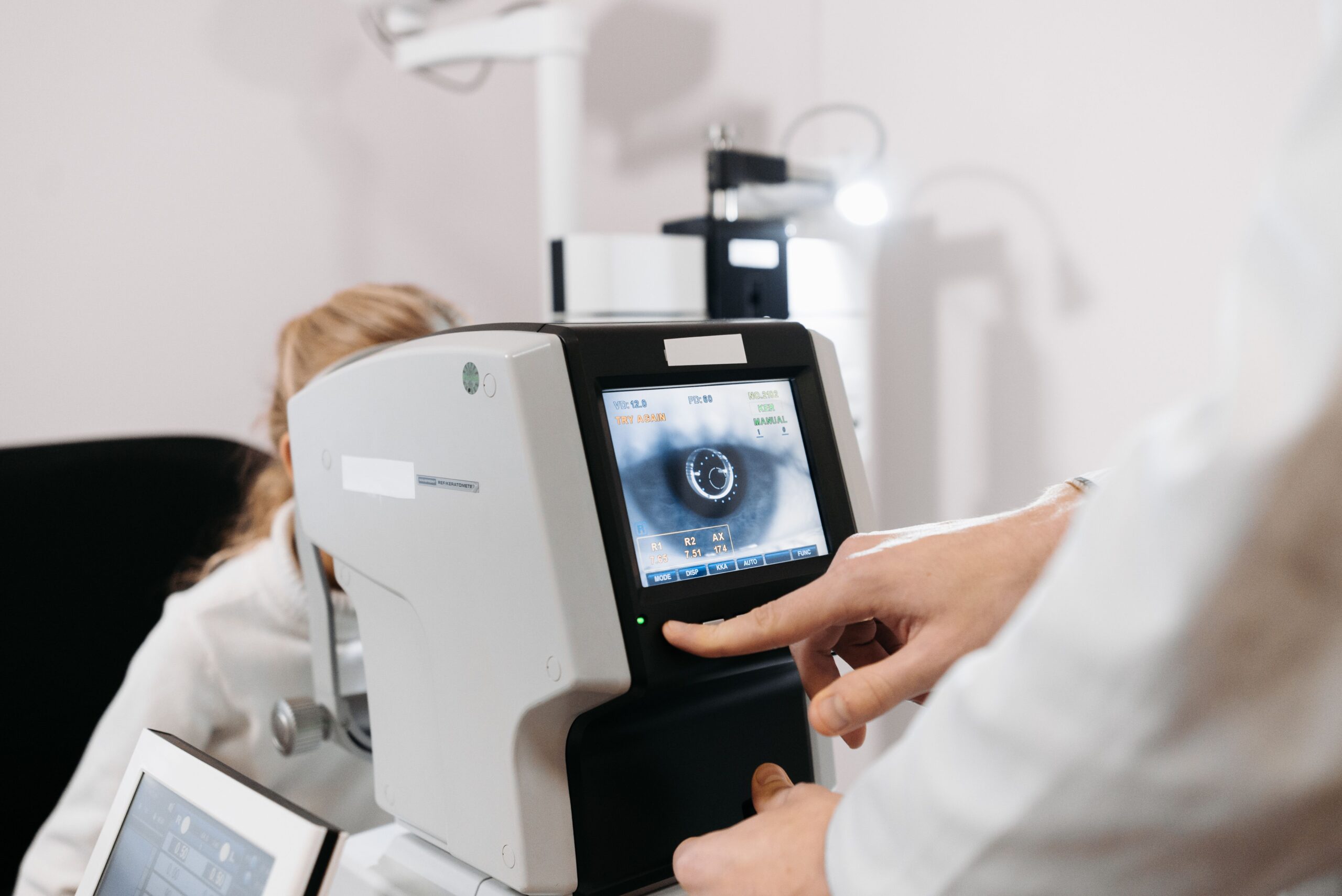
What you consider a clinical record of all the details, that is where EHR comes in. As well as how it involves every bit of data on what happens to a specific patient within the medical setting.
These can involve matters like diagnoses, prescriptions, lab work, imaging, and physician notes, all of it in one place, searchable, updated in real time.
The practical upside is significant. A physician reviewing a patient before walking into the room already knows their medication history, their last three lab results, and any flagged interactions.
That kind of access reduces errors in ways that paper records genuinely cannot. The HITECH Act in the US pushed adoption through financial incentives, though the clinical argument was already solid well before any policy attached itself to it.
The limitation is just as clear. EHRs track what happened medically. They were built for clinicians, around clinical needs.
Whether a patient opened a recall message, whether they have been unresponsive to outreach for the past seven months, or whether a billing issue is quietly pushing them toward switching providers.
None of that exists inside the EHR. It was never designed to hold it.
What is a CRM in Healthcare?
CRM software carries a sales reputation that puts some healthcare people off the term. Fair enough. But the function underneath it, managing relationships at a volume no staff team can handle manually and fits healthcare operations better than the label suggests.
In a clinical setting, the CRM holds the relationship record. It tracks when a patient last received communication, how they came in originally, how many times they rescheduled, and whether they responded to a reactivation campaign six months ago. Automated reminders run through it. Follow-up sequences run through it. No-show reduction strategies run through it.
What it does not hold is anything clinical. The CRM has no window into the EHR. It cannot see a diagnosis from last week’s visit, a care plan that requires contact at thirty days, or a lab flag that should have triggered a call before the patient even got home.
What Is EHR and CRM Integration and Why Does It Matter?

A patient updates their contact details, and both systems reflect it. A physician documents the need for a follow-up in six weeks.
The CRM schedules outreach without a separate task being created by anyone. A claim is almost out the door with a missing clinical attachment; the connected workflow catches it before the rejection, not after.
The efficiency gains are real. But the more important outcome is what happens to decision quality across the organization. Billing teams without a clinical context make billing errors.
Communication teams without clinical data send outreach that lands completely wrong. Operations managers trying to understand retention without seeing care triggers will keep drawing the wrong conclusions.
Integration does not just reduce manual work. It gives every team the same starting point, and better decisions follow from that. In short, you have various perks as a round-up:
- Keeps patient info and conversations in one place so nothing slips through
- Saves time since staff aren’t switching between systems all day
- Makes patient follow-ups feel smoother, less repetitive
- Gives a clearer view of each patient beyond just medical data
- Helps teams act faster because everything is easy to find
How EHR and CRM Integration Streamlines Patient Data Management
Most practices have more duplicate records than they realize. A name was entered slightly differently in two systems.
An insurance update that made it into the EHR but never reached the CRM. An address change from six months ago, with one platform still sending mail to the old one. Staff catches some of it. The rest keeps moving forward and creates problems later.
Connected systems remove the maintenance burden. When a clinical visit updates a patient’s record in the EHR, the CRM reflects it. Billing status shifts without a call between departments. There is one version of the record. Both platforms see it.
Billing accuracy is where the returns show up most clearly. Claim rejections linked to missing or inconsistent documentation trace back to a data connectivity problem more often than anything else.
Medlife medical billing company has built its entire operational approach around the understanding that billing output quality is inseparable from data quality, and data quality depends on whether the systems holding that data are actually connected.
Compliance follows the same logic. Aligned records across both platforms make audit preparation more straightforward and reduce the exposure that comes from two systems holding two slightly different versions of the same patient’s information.
Key Benefits of Integrating EHR and CRM for Healthcare Providers

The benefits do not stay in one place. They distribute across every department that touches patient data, which in most practices is nearly all of them.
Staff time is the most immediate. Completed appointments triggering follow-up surveys automatically, referrals updating CRM profiles without separate entry, care plan milestones generating outreach without manual scheduling, individually, these are small. Across a full month of patient volume, the hours add up to something meaningful.
Revenue cycle performance follows directly from data quality. Cleaner claims go out when billing has accurate, current clinical data to work from. Fewer rejections. Less time in the denial queue. The financial improvement is not theoretical, it shows in monthly collections.
Retention responds to relevance. A patient receiving communication tied to their specific clinical situation behaves differently from one receiving a generic message.
People notice when their provider seems to understand where they are in their care. They also notice the opposite, and they leave without explaining why.
Staff experience also improves. Manual data entry is not dramatic. It is quiet, constant, and draining. Removing it does not transform anyone’s job overnight, but it removes the friction that accumulates into exhaustion over months.
How Integration Improves Patient Communication and Engagement
Without connected systems, outreach runs on schedule rather than context. A reminder is sent because it is day thirty. A newsletter goes out because it is the first of the month.
Neither one accounts for where a specific patient actually is in their care, recovering from a procedure, newly diagnosed, or simply unreachable for the past nine months.
When systems share data, communication responds to events. A missed follow-up triggers outreach before the window closes. A field lab result prompts a same-day patient notification. The timing is no longer arbitrary.
Education content follows the same shift. A diabetic patient receives materials specific to their condition. A post-surgical patient gets a recovery guide matched to their actual stage of healing.
Content that reflects someone’s real situation is harder to ignore than content that could have gone to anyone.
That relevance is what moves patients from passive recipients to people who actually follow through on care plans, and integration is what makes generating that relevance at scale operationally realistic.
Challenges of EHR and CRM Integration and How to Overcome Them
When integrating an EHR framework, compatibility is often the most common challenge. Many legacy systems were not designed to work together or connect seamlessly, which makes them difficult to replace quickly.
Furthermore, organizations that rely on these systems often face a real choice between using middleware to bridge the gap or undertaking a longer migration to more open platforms. Prioritizing vendors that support HL7 FHIR standards from the start can prevent much of this friction from emerging after a contract has already been signed.
Privacy compliance is not optional. Connecting two platforms that both carry protected patient data requires access controls, encryption standards, and formal data sharing agreements in place before data starts moving. Building these in from the beginning is significantly less costly than adding them after something goes wrong.
Smaller practices face real budget constraints. Pre-built connectors have reduced implementation costs considerably. A phased approach, one defined use case, a small pilot, measured results, and expansion from there works better than attempting full integration at once.
Future of EHR and CRM Integration in Healthcare Operations
As the integration process goes beyond just some competitive benefit towards initial expectations, while predictive analysis is in another scenario. For you see, they scan patients meticulously before their booking just stops. In fact, it provides such medical practices a breather to think before they react.
Integration is moving from competitive advantage toward baseline expectation.
In addition, Integration is what makes meeting those expectations sustainable rather than a staff-exhausting manual effort.
Conclusion
The daily cost of disconnected systems is rarely one large failure. It is constant small friction, data re-entered, outreach mistimed, and claims rejected over gaps that should not have existed.
Regarding the debate between ER and CRM, the debate may continue. Not because the work becomes easier, but because it stops needing to be done manually at all. That is the real return on integration. Less noise. Better decisions. A practice that functions the way it was supposed to from the beginning.