By
By 
Healthcare has always been about one thing: helping people get better. But the systems built to deliver that care have long struggled with overwhelming workloads, limited resources, and mountains of data that no human team can process quickly enough.
That’s where AI tools in healthcare are making a real difference in 2026.
Whether for diagnosing diseases or for automatically documenting patient records, the integration of AI technology is making life easier for physicians while providing safer, faster healthcare services. According to Grand View Research, the market value of artificial intelligence in the healthcare industry exceeded $36 billion in 2025 and is estimated to reach $505 billion by 2033.
This guide covers ten of the best AI tools available in healthcare right now, what they do, and why they matter for patient outcomes.
Why AI in Healthcare Matters More Than Ever
The pressure on healthcare systems is not easing. Aging populations, rising rates of chronic disease, staff shortages, and increasing administrative burdens are straining clinics and hospitals worldwide.
AI addresses these challenges in several important ways:
- It processes large volumes of patient data far faster than any human team.
- It reduces the time spent on documentation and admin tasks.
- It supports more accurate and earlier diagnoses.
- It helps personalize treatment plans based on individual patient data.
- It improves communication between care teams and patients.
With the right AI tools in healthcare, providers spend less time on paperwork and more time with patients. That shift alone can meaningfully improve care quality.
10 Best AI Tools in Healthcare in 2026
1. Nuance DAX Copilot (Microsoft)
Nuance DAX Copilot is one of the most widely adopted AI documentation tools in healthcare today. It listens to doctor-patient conversations in real time and automatically generates clinical notes that integrate directly into electronic health records (EHRs).
Physicians spend roughly two hours on documentation for every one hour of direct patient care. Nuance DAX reduces that documentation time by 50 to 70%, giving clinicians ample time to focus on their patients rather than their screens. It works especially well within Epic-based health systems and is one of the top picks for enterprise-level ambient documentation.
Best for: Large health systems and hospitals using Epic EHR.
2. Abridge
Abridge is another strong ambient clinical documentation platform. Like Nuance DAX, it uses AI to listen to patient encounters and generate structured clinical notes in real time. What sets Abridge apart is how well it learns individual physician preferences over time, producing notes that become increasingly tailored to each doctor’s style.
It also generates patient-facing appointment summaries, which help improve patient understanding and engagement after consultations.
Best for: Health systems looking to reduce documentation burden while improving patient communication.
3. Aidoc
Aidoc focuses on medical imaging and radiology. They use artificial intelligence to analyze imaging studies and detect urgent and critical findings that the radiologist needs to address. The workflow prioritizes patient studies.
The number of FDA-approved algorithms from Aidoc exceeds 50, and the company works with around 2,000 healthcare facilities worldwide. Aidoc teamed up with Sol Radiology in May 2026 and introduced its AI technology solution in Southern California.
Best for: Radiology departments that need faster triage and critical case detection.
4. IBM Watson Health
One such long-standing name for AI-based health care solutions is IBM Watson Health. One of the major strengths of this company is its clinical decision support solutions. This solution leverages natural language processing for extracting insights from unstructured clinical notes, research articles, and patient data.
It helps care teams make more informed treatment decisions, particularly in complex or chronic disease cases. The platform is widely used in oncology, where matching patients to clinical trials and treatment protocols requires rapidly processing large volumes of evidence-based data.
Best for: Health systems that need AI-powered clinical decision support, especially in oncology.
5. Suki AI
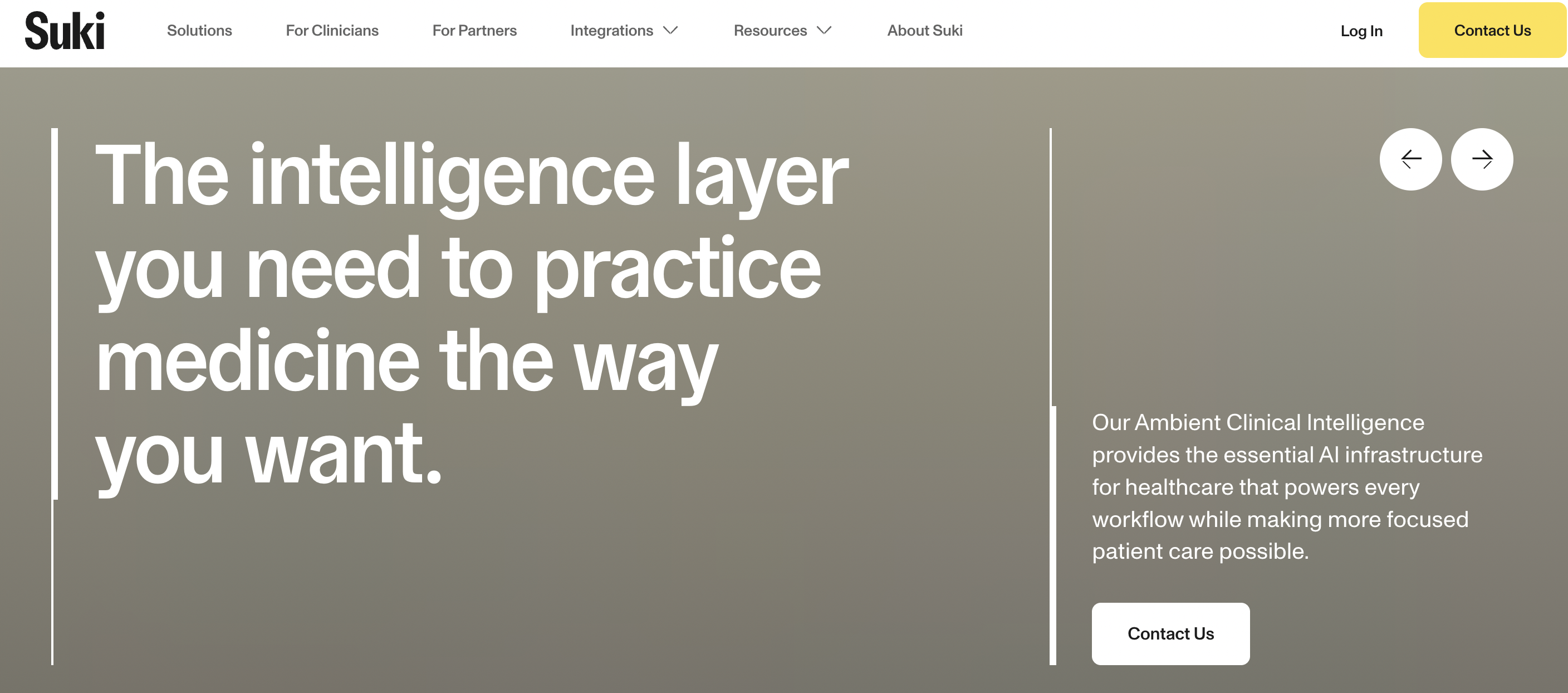
Suki is an artificial intelligence designed explicitly for clinicians. The software listens and produces clinical notes in real-time during patient consultations. It works with all common electronic health record systems and adapts to individual doctors’ preferences.
Unlike many other enterprise-level products, Suki is also available to standalone practices. It is among the leading AI-based scribing services currently available.
Best for: Independent practices and smaller clinics looking for an affordable AI scribe solution.
6. Ada Health
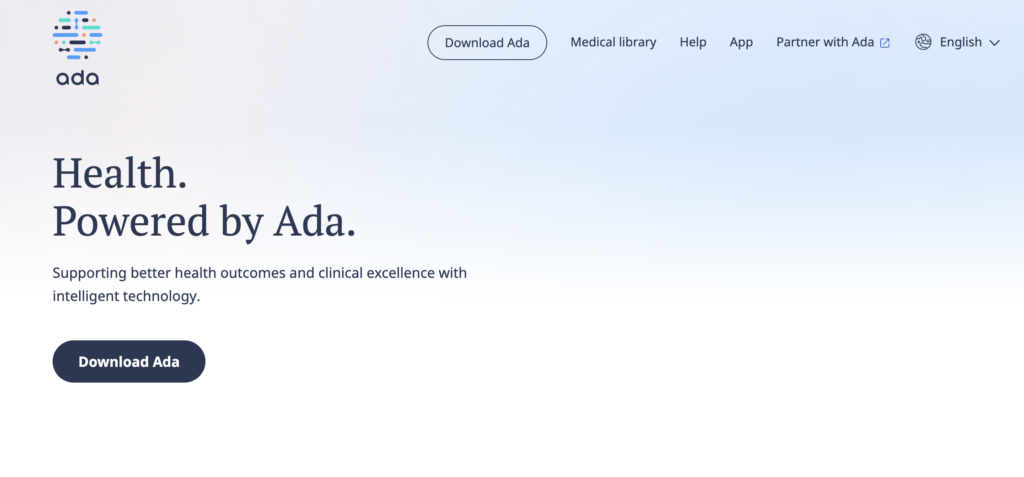
Ada Health is a symptom checker that uses clinical-level logic. Symptoms are entered by patients via the app, which then uses Ada’s probabilistic reasoning engine to generate suggestions and advise on further action.
The Ada health engine will be very sophisticated in 2026. At present, it serves as a smart link between the patient’s concerns and the expert’s advice, avoiding needless hospital visits.
Best for: Telehealth platforms and health systems looking to improve patient triage and self-care guidance.
7. LeanTaaS (iQueue)
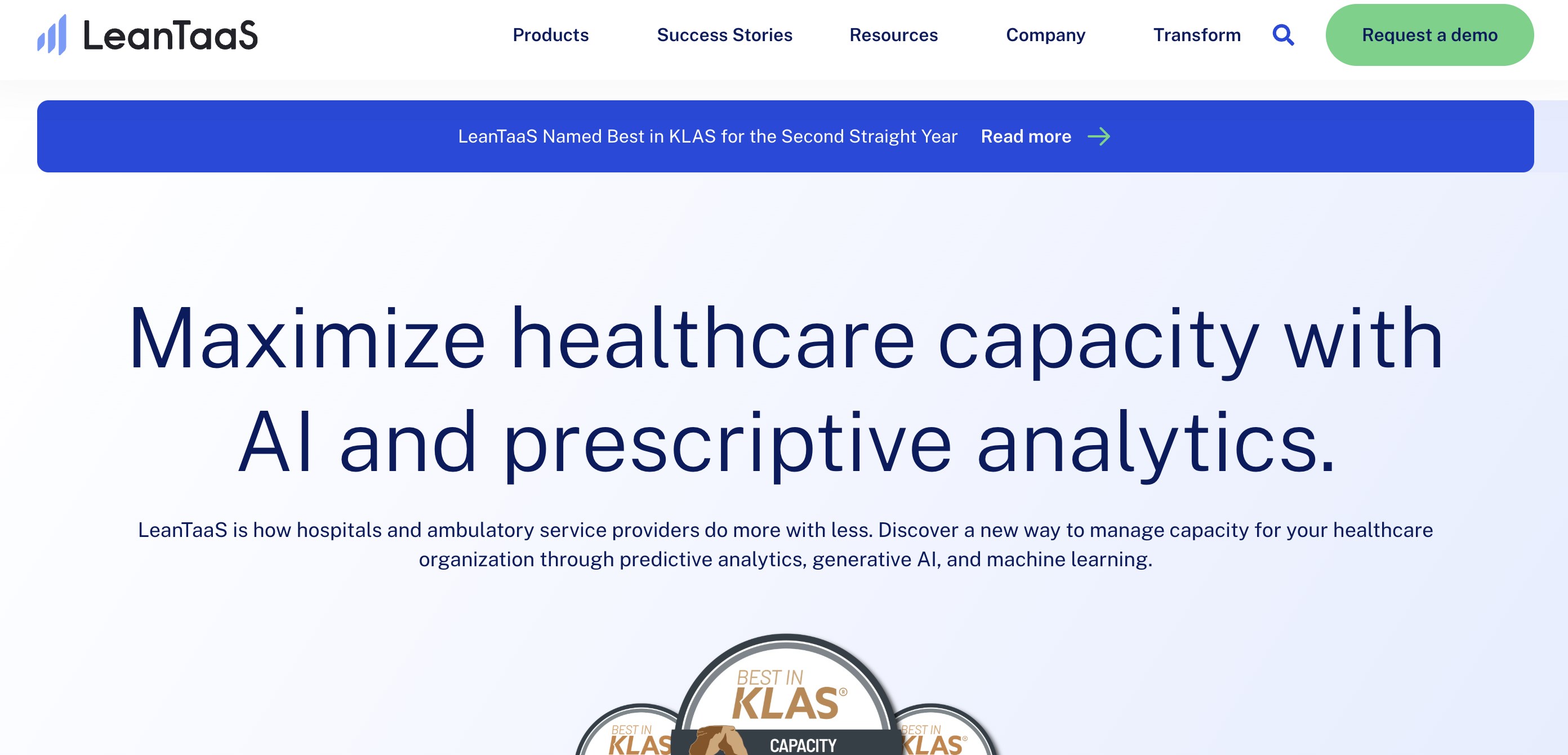
Unlike other companies discussed in this paper, LeanTaaS does not provide tools for clinical documentation or diagnosis; rather, its approach is geared towards enhancing efficiency. The company’s iQueue is an innovative solution that leverages AI to increase capacity utilization and scheduling within the hospitals, which includes the use of operating rooms, infusion center operations, and bed utilization.
LeanTaaS was rated best in KLAS for Capacity Optimization Management in both 2025 and 2026. It now serves nearly 200 health systems across more than 1,200 hospitals. For healthcare administrators, this kind of tool can significantly reduce wait times and improve resource allocation without adding headcount.
Best for: Hospital administrators and operations teams managing large multi-site systems.
8. Nabla Copilot
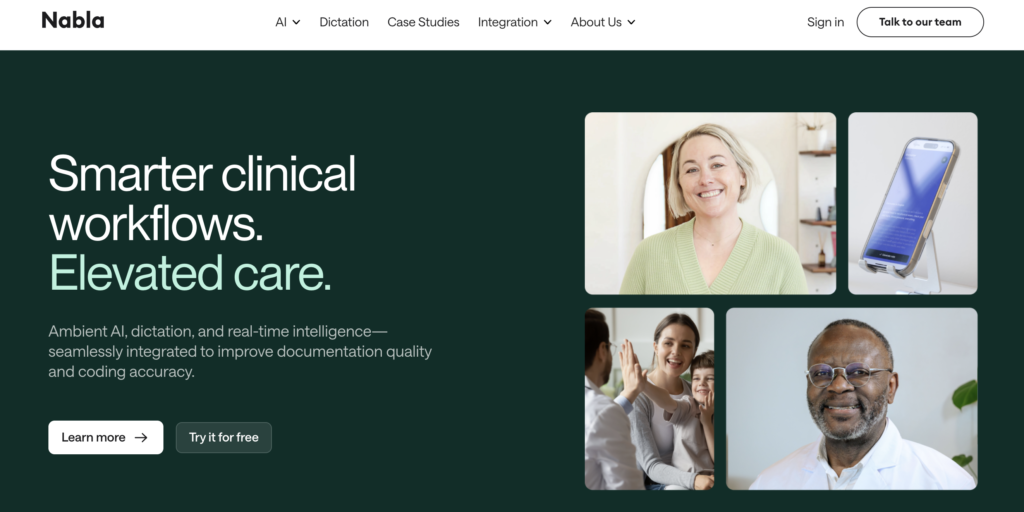
Nabla Copilot is an excellent choice for independent and mid-size practices. It provides ambient AI documentation that does not depend on any particular EHR system – it is compatible with the majority of EHRs on the market.
Nabla Copilot can be used with different languages, thus making it suitable for practices that serve linguistically diverse communities. The platform also provides a free version, which is good news for smaller practices.
Best for: Independent practices, multilingual clinics, and providers who need EHR flexibility.
9. Wysa
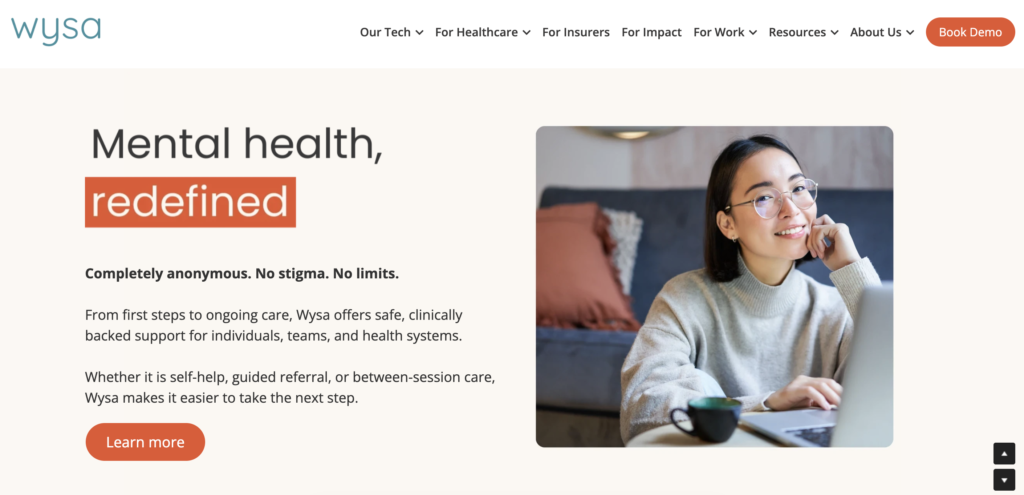
Wysa is an example of a mental health tool that uses artificial intelligence. It offers evidence-based techniques for tackling anxiety, stress, and depression through conversation. The program is FDA Breakthrough Designated and backed by clinical trials.
Unfortunately, even today, mental disorders remain one of the least developed areas of medicine. With apps such as Wysa, assistance can be provided not only during therapy but at any time convenient for the patient.
Best for: Mental health providers, employee wellness programs, and digital health platforms.
10. Keragon
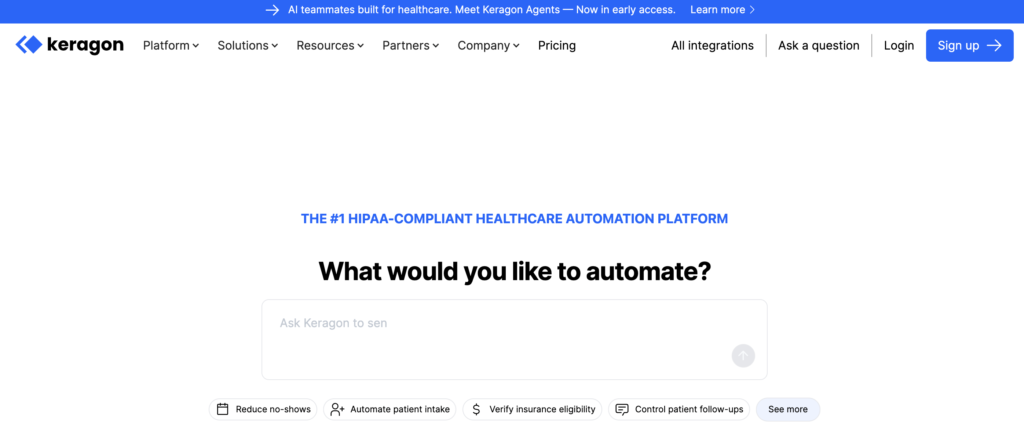
Keragon is a HIPAA-enabled workflow automation software used in the healthcare industry. It enables integration with more than 300 health tools, including electronic health record solutions such as Athenahealth and Elation Health.
Keragon streamlines processes for companies dealing with multiple technology stacks in the healthcare industry. Automating mundane tasks and reducing the manual work required to ensure data is safely transferred between different platforms helps save precious time and avoid mistakes caused by manual input.
Best for: Healthcare organizations that need to connect multiple tools and automate workflows without large IT investments.
What to Consider When Choosing an AI Healthcare Tool
One size does not fit all when it comes to healthcare technologies. It would be useful to take into account several important issues before purchasing:
- What issue needs to be addressed? Different solutions exist depending on whether the problem relates to documentation, diagnostics, scheduling, and so on.
- What systems do you already use? Integration with your existing EHR or CRM is often critical.
- What is your budget and team size? Some tools are built for large health systems, while others work well for smaller practices.
- Does it meet compliance requirements? HIPAA compliance is non-negotiable for any tool handling patient data.
- Is there evidence it works? Look for tools with clinical validation, FDA clearance where relevant, and real-world case studies.
The Role of Custom AI Development in Healthcare
Off-the-shelf AI tools cover a lot of ground, but many healthcare organizations have specific needs that standard platforms cannot meet. This is where AI development services become valuable.
Customized AI systems can be created to meet the unique needs, structures, and regulations of specific healthcare providers. This way, it could be a custom diagnostic system, a particular patient engagement system, or even an internal workflow automation system. Customized AI systems will provide results that generic AI may not.
By working with experts in AI consulting services, healthcare companies can identify the right use cases for implementing AI technology and avoid mistakes that could otherwise cost them dearly.
Looking Ahead
AI is not replacing healthcare workers. Instead, AI is providing them with better ways to do their jobs. The greatest results are achieved when AI does all the mundane tasks, while physicians concentrate on what they excel at: treating people.
AI-based healthcare software applications have already proved themselves effective in many areas, including diagnosis, medical record-keeping, psychiatric services, and hospital management. As their implementation continues among healthcare providers, the standard of care can only improve further.
For healthcare organizations thinking about where to start, the answer is often simpler than expected. Start with one pain point, find a tool that addresses it well, and build from there. The most important step is the first one.