By
By 
The pharmaceutical industry is undergoing a significant period of change, driven by advances in AI, data infrastructure, and clinical research methods.
Thanks to tools like artificial intelligence and smarter data platforms, the way we find and deliver medicine is being completely reimagined. Processes that have traditionally taken many years and substantial investment may become faster and more targeted, which could benefit patients over time.
We are seeing this happen at a critical moment. According to an analysis by PwC, U.S. healthcare costs now exceed $5 trillion annually, growing at 8% per year, a trajectory that is simply unsustainable.
However, there are plenty of reasons to be hopeful. Biopharma venture investment rebounded sharply to approximately $26 billion in 2024 after a two-year downturn, signaling renewed industry confidence in a new wave of scientific breakthroughs.
Technology isn’t just helping the process. It’s rebuilding it from the ground up. Whether it’s AI finding new targets for medicine or digital tools making it easier for people to join clinical trials, these innovations are changing the game.
This article looks at the big changes happening today and how they will help patients and the whole healthcare system in the long run.
- AI and Machine Learning Accelerating Drug Discovery Timelines
- Decentralized Clinical Trials Bringing Studies to Patients
- Accelerating Biologics and the Rise of Antibody Discovery Services
- Precision Medicine and Genomics in Tailoring Treatment
- Drug Access and Manufacturing Innovation
- Frequently Asked Questions (FAQs)
AI and Machine Learning Accelerating Drug Discovery Timelines
Artificial intelligence and machine learning are quickly reshaping how drugs are discovered, making a process that once took decades far more efficient. Traditionally, bringing a new drug to market has taken about 14.6 years and nearly $2.6 billion. However, AI is starting to reduce both time and cost in meaningful ways.
A 2025 survey by ZS Associates found that 85% of biopharma tech executives plan to invest heavily in data, digital tools, and AI for R&D.
One top-10 pharma company even expects to save around $1 billion in development costs over five years. Companies like Amgen are already seeing results, doubling clinical trial enrollment speed using machine learning tools.
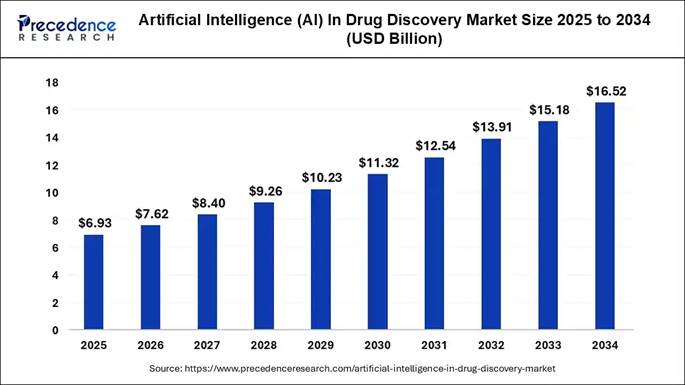
Research activity is also booming, with data from the Wiley Online Library showing over 400% growth in AI-related drug discovery publications since 2019.
Decentralized Clinical Trials Bringing Studies to Patients
Decentralized clinical trials are changing the game by bringing medical studies directly to the patient. Instead of making people travel to big hospitals, these trials use digital tools, remote monitoring, and video calls so participants can join from home.
This shift makes life much easier for patients and their caregivers, removing the stress of constant travel and time away from work.
The model is also helping solve a major problem in research: diversity. Because it is easier to participate, more people from different backgrounds can join. In fact, the FDA now encourages this approach to help reach groups that have been left out in the past.
By meeting patients where they are, companies can fill their studies faster and collect better, real-world data. It is a more human way to handle research that speeds up the journey of new medicines while making sure they work for everyone.
Accelerating Biologics and the Rise of Antibody Discovery Services
The world of biologics is moving faster than ever, thanks to the rise of specialized antibody discovery services. These services focus on finding, engineering, and perfecting antibody candidates that can target diseases with incredible precision.
This field is maturing quickly, playing a central role in filling pharmaceutical pipelines with next-generation treatments. Key growth drivers include AI-integrated platforms and high-throughput screening technologies that help identify the best leads much earlier in the process.
Today, many service providers offer end-to-end models that guide a project from the initial idea all the way through preclinical testing. This approach saves time and improves the chances of success in the clinic.
Alloy Therapeutics notes that using advanced workflows to optimize antibodies helps ensure drug candidates are properly refined for success in clinical trials. By applying cutting-edge tools, these platforms can unlock the full potential of your antibody program, turning complex scientific data into effective therapies.
Precision Medicine and Genomics in Tailoring Treatment
Precision medicine is changing healthcare by shifting from a one-size-fits-all approach to treatments tailored to your unique genetic code. By using breakthroughs in genomics and AI-powered diagnostics, doctors can now pick the exact medicine that matches a patient’s biological profile.
While this started mostly in cancer research, which still makes up about 40% of antibody discovery, it is now expanding into heart disease, neurology, and rare disorders. We are even seeing mRNA technology used to create personalized vaccines designed for a single person’s needs.
The impact of this shift is clear in recent data. According to the FDA, in 2025, the Center for Drug Evaluation and Research approved 46 new “novel” drugs that had never been on the U.S. market before. They also made key decisions to approve new uses for existing drugs. These approvals suggest continued momentum toward more targeted therapies, though access, cost, and clinical applicability still vary across conditions and patient populations.
Drug Access and Manufacturing Innovation
Innovation isn’t just happening in labs. It is also transforming how we make and deliver medicine. Companies are now using automation and AI to manage supply chains, which helps lower costs and prevent drug shortages. To make the system more reliable, major players are bringing production closer to home.
According to Reuters, Sanofi plans to invest at least $20 billion in the United States through 2030 to boost manufacturing and research. This move joins other drugmakers expanding their U.S. presence in response to changing trade policies. The French company aims to grow its capacity through direct site investments and domestic partnerships.
Beyond the factory, smart packaging with RFID tags and AI sensors now monitors storage conditions in real time to ensure safety. Together, these advances bridge the gap between production and the patient, making life-saving treatments more accessible and reliable for everyone.
Frequently Asked Questions (FAQs)
What are antibody discovery services, and why are they important in modern drug development?
Antibody discovery services identify and engineer proteins to target diseases with high precision. By using AI and advanced screening, these services find the most effective candidates faster and more reliably. They are essential for creating next-generation therapies for cancer and autoimmune disorders, significantly improving the chances of clinical success.
How is AI changing the speed and cost of drug discovery in the United States?
AI may reduce parts of the drug discovery timeline by helping researchers prioritize compounds and identify patterns earlier in development. Predicting success early, it reduces the billions wasted on failed trials. Recent data shows companies using AI can double trial enrollment speeds and potentially save $1 billion in development costs over just five years.
What is a decentralized clinical trial, and how does it improve patient access?
A decentralized clinical trial (DCT) uses remote monitoring, telehealth, and digital platforms to allow patients to participate from home. This reduces geographic and logistical barriers while improving diversity in trial populations. It also makes drug development more inclusive and efficient, especially for underserved communities across the U.S.
We are entering a new era of medicine where AI, advanced antibody discovery, and decentralized trials are making healthcare faster and more personal. For the U.S. and other nations, these tools offer a real chance to cut the massive costs and long wait times traditionally tied to new treatments.
However, technology is only part of the solution. To truly succeed, we need skilled talent, flexible regulations, and fair access for everyone. The science is incredibly promising, but our systems must evolve to keep up. The goal now is to ensure these breakthroughs actually reach the patients who need them most.