 By
By  Medically Reviewed by
The significance of telehealth has shifted from convenience to a cornerstone in the modern healthcare industry.
With rapid technological advancements, continuous regulatory changes, shifting patient expectations, and insights from large-scale telehealth adoption, care delivery is being redefined.
In 2026, telehealth will undergo better refinement, integration, and accountability.
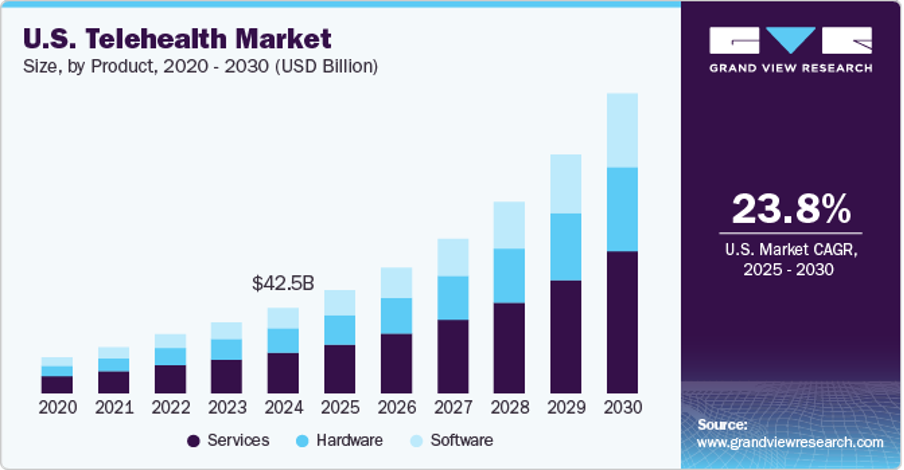
According to Grand View Research, the U.S. telehealth market is projected to reach $150.13 billion by 2030, growing at a CAGR of 23.8%. This indicates that telehealth will become increasingly embedded in our healthcare system.
This article explores the key changes surrounding telehealth in 2026. Such as which technological adoptions and patient engagement strategies providers should focus on, as these will define the future of telehealth.
Telehealth vs Telemedicine
As virtual healthcare becomes a significant part of modern healthcare, many times, terms such as telehealth and telemedicine are used interchangeably (even though they are not the same)
The table here highlights the distinct difference between the two healthcare technology trends.
| Sl. No | Areas of Differentiation | Telehealth | Telemedicine |
| 1 | Scope | Provides clinical care, non-clinical services and digital health tools. | Specifically focuses on delivering clinical services remotely. |
| 2 | Primary Purpose | Support the healthcare ecosystem, including care delivery, management, and education | Imitates doctor-patient interactions virtually. |
| 3 | Types of Services | Telehealth offers remote patient monitoring, mobile health apps, telemedicine, care coordination, and provider training. | Provides clinical care, non-clinical services, and digital health tools. |
| 4 | Technology Use | Telehealth requires a wide range of technologies which range from AI-driven analytics, wearables, digital platforms, etc. | Telemedicine offers consultations, follow-ups, diagnosis, and treatment. |
| 5 | Users Involved | Allows access to clinical healthcare regardless of the location. | It mostly involves clinicians and patients. |
| 6 | Role in Future Healthcare Strategies | Allows continuous, data-driven care models. | Telemedicine is solely dependent on phone, video, and secure messaging. |
Factors that Highlight Why Telehealth is Here to Stay!
The future of telehealth has become the center of the healthcare system for the following reasons:
Patient Demand: According to Harvard Health Publication, 76% of hospitals in the U.S. connect doctors and patients remotely via telehealth.
Provider Shortages: There is always a global shortage of healthcare workers; incorporating digital healthcare will mitigate the shortage to some extent.
AI Integration: Adoption of AI-integrated telehealth platforms has increased by nearly 45%, enabling more proactive and data-driven care delivery.
Value-based Care: Virtual care allows better engagement for long-term treatments, and it reduces the possibility of no-shows from the patient’s end, resulting in better healthcare outcomes.
How Is Telehealth Beneficial across Different Healthcare Specialties?
Telehealth is rapidly expanding across diverse healthcare disciplines, powered by patients’ approval and improved digital tools. Here, we highlight a few scenarios about how telehealth has been making a real difference in the healthcare industry.
Mental and behavioral health has adopted telehealth trends as it simplifies the initial rounds of assessments, patient medication management, ongoing therapy, and long-term follow-up.
In dermatology, telehealth allows a virtual visual-first assessment. Additionally, once the diagnosis is done, telehealth allows for a check on the treatment responses.
Telehealth enables patients to share medical history and home-recorded vitals with cardiologists to analyze risk.
At the same time, there are Remote Patient Monitoring (RPM) devices, such as wearables and blood pressure monitors, that gather detailed reports on patient health at regular intervals.
These value-based services are building the foundation of the future of telehealth technology in the healthcare industry.
Why Telehealth is the Future of Healthcare
According to one of the case studies by Epic Research, analyzing 35 million telehealth visits across 33 specialties, found that a significant percentage of patients did not require in-person follow-up within three months of their virtual visit.
Given that telehealth has such an immense impact already, several facts and trends further highlight its rapid evolution, which we have mentioned in distinct categories below.
Technological Telehealth Trends:
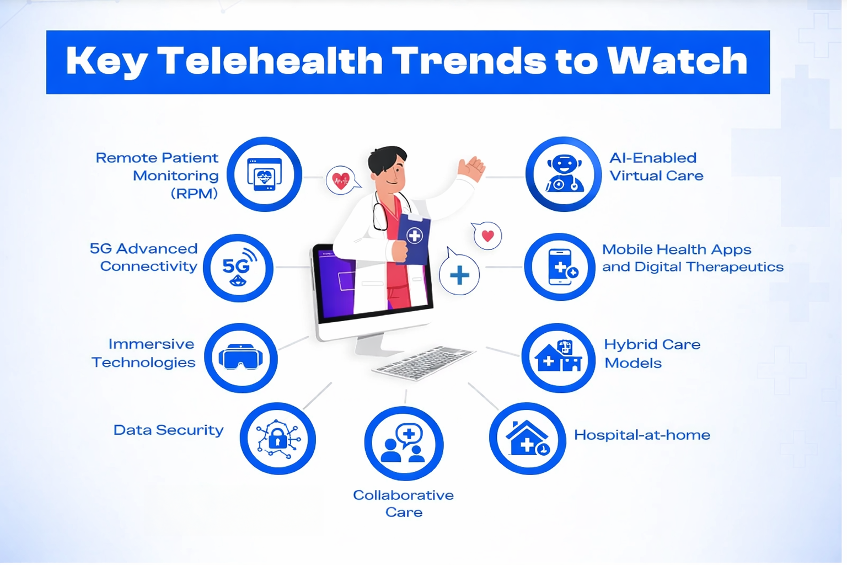
- Remote Patient Monitoring (RPM): Early detection of health concerns and supportive proactive healthcare is possible through connected devices and wearables that provide real-time health data.
- AI-Enabled Virtual Care: Triage, documentation, diagnostics, personalized care pathways, and clinical decision support, all of which are improved with the combined application of Artificial Intelligence and telehealth.
- 5G Advanced Connectivity: Better network infrastructure allows high-quality telehealth connections and enhanced real-time data transfer.
- Mobile Health Apps and Digital Therapeutics: Integrated application-based support allows vigilance over behavioral health, chronic disease management, and patient education.
- Immersive Technologies: Augmented reality and virtual reality have already become a part of the virtual clinical training process, therapy, and rehabilitation process.
- Data Security and Interoperability: The telehealth service delivery is scaled with better integration with the Electronic Health Records (EHRs), improved cybersecurity, and secure data exchange.
Clinical Telehealth Trends:
- Hybrid Care Models: Telehealth is the first entry point for healthcare check-ups. Limiting physical checks to only when it is absolutely necessary.
- Hospital-at-home: Acute care at home is better delivered through telehealth, diminishing the number of hospital admissions, at the same time improving the patients’ healthcare outcomes.
- Collaborative Care: Virtual care platforms make it easier for teams to deliver healthcare services. As different specialties, primary care providers, and care managers are easily available across numerous treatment stages.
Regulatory and Strategic Steps Providers Must Take to Enforce Telehealth Strategically
Regulatory stability is essential for the future of telehealth. Providers must navigate telehealth compliance requirements, which include HIPAA enforcement and evolving reimbursement mandates from the 2026 CMS Physician Fee Schedule.
Moreover, value-based billing models and the distinctions of “Place of Service” (POS) codes for home-based care are no longer optional.
However, to thrive in the healthcare industry, investing in a “telehealth-ready” platform is essential for long-term scalability.
The right platform must provide more than just a video link; it requires seamless integration with Electronic Health Records (EHRs) and documentation tools to support “virtual direct supervision”.
This is only possible when providers are thoroughly informed about the benefits and challenges of telehealth.
By adopting technology that is natively designed for high-level security and integrated billing, providers can reduce administrative friction and ensure that every virtual encounter meets modern healthcare standards.
Conclusion
Telehealth is unlocking a new level of effectiveness. In 2026, virtual care is becoming better, smarter, more connected, and more indispensable to healthcare delivery than ever before.
Providers who choose to upgrade their systems / capabilities with telehealth trends through technology, regulatory readiness, operational training, and patient-centered digital experiences will be better positioned to address the evolving demands of modern healthcare.
They will be ready to move beyond simple video calls to provide a seamless and integrated clinical experience.
Ultimately, the future of telehealth technology is not approaching, it has already arrived, and those prepared for this shift will lead the next generation of patient care.